Why Assessment is the Foundation of Lasting Health
One question I hear from almost every new client is: “Why does the assessment take so long?”
It’s a fair question, and an important one. The answer lies at the very heart of everything I do.
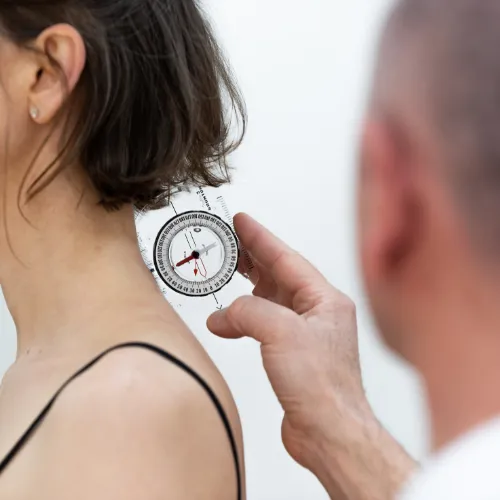
Educating my clients on the value of a thorough assessment isn’t just a formality, it’s an essential part of the process itself. A comprehensive assessment allows a practitioner like me to identify all the imbalances and stressors present in the body. Without it, any treatment or programme is little more than guesswork.

What a Comprehensive Assessment Involves
A full musculoskeletal assessment typically takes two to four hours. Clients are often surprised, not just by the depth of the process, but by what it reveals. Taken in isolation, any single assessment finding tells only a small part of the story. It’s when we assess the body in its entirety that the full picture of imbalance and dysfunction becomes clear.
We begin with posture. How a person holds themselves tells us a great deal: a sway back, a kyphotic curve, or a layered syndrome each points to specific muscles that may be short and overactive, or long and underperforming. Understanding postural imbalances gives us a roadmap for restoring the body to balance.
From there, we assess breathing mechanics, checking for inverted breathing patterns that can compromise the entire system. We look at joint health and mobility, the integrity of the spine, and the condition of the discs, spinal nerves, and vertebral bodies. Careful attention is paid to the teeth and jaw alignment, and to the vestibular system: eyes, ears, and nose. All play a vital role in balance and movement. Finally, we observe how a person walks and moves, providing a baseline for identifying further compensations.
“If you’re not assessing, you’re guessing.”
- Paul Chek
From Assessment to Understanding
Once the assessment is complete, we sit down together to go through the findings. For many clients, this is a revelatory moment. For the first time, they understand what their body has been trying to tell them, and why they’ve been feeling the way they have. The chronic pain, the stiffness, the recurring injuries: suddenly, they make sense.
This is the fundamental failure of conventional approaches: the one-size-fits-all model doesn’t address the person as a whole. Without this level of attention, how is anyone supposed to know what’s truly going on in their body. Let alone how to fix it?
Helen's experience:
I was excited to start working with Tony because, having known him personally for years, I knew how deeply he had studied the human body and how much he cares about the work he does. When he said the first step would be a physical assessment, I pictured something like the one I'd had at a local gym: stand in a high-tech scanner, wait for the printout. I couldn't have been more wrong.
My assessment with Tony took about three hours — and there was more we could have covered. I'll confess that I kept stopping to ask questions, because I was so fascinated by his approach. Over the past decade I've learned a lot about the human body, both personally and professionally: training as a yoga teacher, attending Feldenkrais classes, qualifying to teach Bones for Life (a functional movement programme) and training as a clinical hypnotherapist specialising in the mind-body connection. But Tony's knowledge is of a different order.
What most impressed me was the meticulous precision of it all. In my own teaching I ask people to imagine a plumbline – a lead weight on a string suspended from the crown of the head – as a way of self-assessing spinal alignment. Tony has an actual plumbline, suspended from the ceiling in front of a Usual Suspects-style measurement grid. The combination allowed him to assess exactly where my spine tracked true to vertical, and where it didn't, from every angle. From there he produced an array of orthopaedic measuring instruments that recorded – to the millimetre – the angles of my joints, the difference in shoulder height, the tilt of my pelvis and more. Throughout, I felt in safe hands. Tony carries out his assessments with a focus and professionalism that inspires equal measures of confidence and curiosity, and the time just flew by.
Alongside the physical data, Tony asked about my life: how much time I realistically had on a given day, when and where I was likely to exercise. He then took all of that – the pages of data and the practical reality of my routine – and built a programme designed not just to work my body, but to correct my alignment a little bit more each day. It fits into my existing life rather than requiring me to reorganise my schedule around it. And a couple of weeks in, when it turned out to be taking me longer than expected, we reassessed together and adjusted accordingly.
That combination of highly targeted but genuinely manageable exercises, built around the realities of my daily life, is why I believe this approach will make a real and lasting difference for me – and for anyone else who works with Tony.
Helen Davis, Founder One Step Forward
The Path to Living the Life You Want
For anyone who wants to live fully, doing the things they love, without fear of injury or decline, a comprehensive assessment is not a luxury. It’s the starting point. It holds the keys to understanding your body, addressing the real causes of your pain, and building a life of genuine health and freedom.
The assessment takes time because your health is the most important asset you have.
Where it all began...
My journey into assessment-led practice began in the fitness industry, where I was fortunate to be mentored by some of the most forward-thinking personal trainers of the time. They took a genuinely holistic view of the body, not just fitness and performance, but health in its fullest sense. What drove me then, as it does now, was the deep satisfaction of making a real difference to someone’s health, wellbeing, and quality of life.
A Turning Point: Paul Chek and Integrated Movement Science
Way back in 2000. I attended Filex one of Australia’s premier fitness expos. It’s where I heard Paul Chek speak for the first time. His ideas were completely against the grain of mainstream practice at the time: assessing the body before prescribing movement, a truly integrated approach to exercise, and a deep respect for the whole person. He was far ahead of the curve, and his thinking resonated with me immediately.
Inspired, I enrolled in what was then called the Exercise Coach programme, now known as Integrated Movement Science (IMS 1). That was the beginning of more than 20 years of intensive study, during which I continually deepened and refined my craft. Each year brought new layers of understanding, and over time I was able to help hundreds of people overcome chronic orthopaedic and health challenges. The common thread? A thorough, honest assessment at the start of every journey.
This is precisely why so many people fail to achieve lasting results with even the most skilled of chiropractors, physiotherapists, and other allied health practitioners. Without a proper assessment to identify the root cause of pain and dysfunction, treatment becomes reactive rather than restorative.
Copyright 2026 Tony Muratori Coaching | Website Terms of Use | Privacy Policy | Cookie Policy